Enhancing Industrial EV Battery Performance with Thermal Conductivity Gel
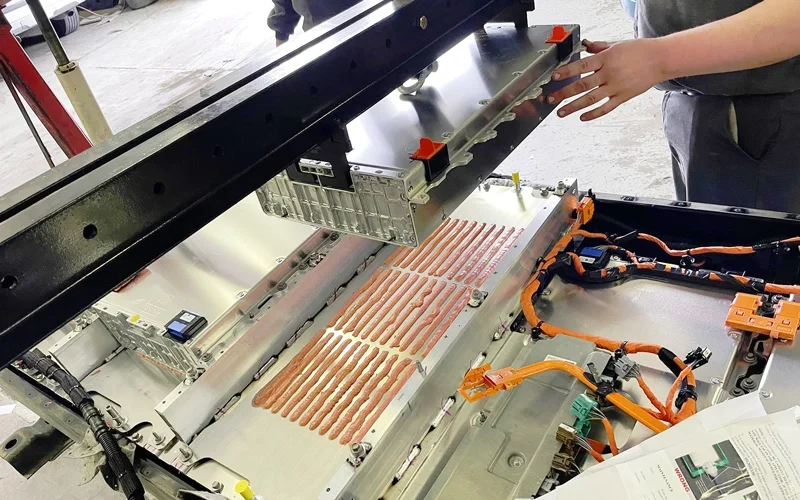
Enhancing Industrial EV Battery Performance with Thermally Conductive Gel
As electric vehicles (EVs) accelerate adoption across industrial sectors, optimizing battery performance and safety has become a top priority for manufacturers and fleet operators alike. A core challenge in this evolution is effective thermal management—keeping battery temperatures within ideal ranges to sustain performance, longevity, and operational safety. One emerging solution gaining traction is the use of thermally conductive gel as part of advanced Battery Thermal Management Systems (BTMS).AOK Technologies
The Importance of Thermal Control in Industrial EV Batteries
Industrial EV batteries generate substantial heat during charge and discharge cycles, especially under heavy loads or fast-charging conditions. Without efficient heat dissipation, excessive internal temperatures can cause significant performance degradation, accelerated aging, and in extreme cases, thermal runaway, which poses safety risks. Maintaining a stable thermal environment is therefore crucial for maximizing both efficiency and service life of battery systems.AOK Technologies
What Is Thermally Conductive Gel?
Thermally conductive gel is an advanced interface material engineered to enhance heat transfer between battery cells and cooling mechanisms. Typically formulated from high-performance composites such as silica gel or specially designed adhesive polymers, this gel exhibits elevated thermal conductivity compared to conventional fillers. Its soft, conformable nature enables it to fill microscopic gaps and surface irregularities, creating efficient thermal pathways that significantly reduce thermal resistance.AOK Technologies
How Thermally Conductive Gel Improves Battery Performance
Thermally conductive gel enhances industrial EV battery systems in several key ways:
1. Efficient Heat Dissipation
By providing a direct and low-resistance thermal interface, the gel rapidly channels heat away from individual cells to the cooling system, preventing localized overheating during high-demand operations.AOK Technologies
2. Temperature Uniformity
Uneven heat distribution within a battery pack can cause “hot spots,” which accelerate degradation and reduce overall performance. Thermally conductive gel helps equalize temperatures across cells, supporting consistent performance and extending lifespan.AOK Technologies
3. Enhanced Safety and Reliability
Stable internal temperatures reduce the likelihood of thermal runaway—a dangerous escalation of heat that can lead to fire or structural damage. By reinforcing thermal control, the gel contributes to safer EV operation in industrial environments.AOK Technologies
Integration into Comprehensive Thermal Solutions
While thermally conductive gel delivers strong performance on its own, its benefits are often maximized when paired with other cooling technologies—including liquid cooling systems, phase change materials (PCMs), and heat pipes. Together, these elements form a robust and tailored thermal management architecture that meets the stringent requirements of industrial EV applications.AOK Technologies
Strategic Impact on Industrial EV Adoption
As sustainability initiatives and electrification efforts expand, industrial users increasingly demand EVs that are efficient, durable, and safe under demanding conditions. Thermally conductive gel plays a vital role in meeting these needs by enabling batteries to operate cooler, more efficiently, and with fewer thermal-induced failures—thereby supporting broader EV deployment in logistics, manufacturing, material handling, and heavy transport applications.AOK Technologies
Conclusion
Thermally conductive gel represents a critical advancement in modern EV battery thermal management. By improving heat dissipation, promoting temperature uniformity, and reinforcing safety, this technology helps industrial electric vehicles achieve higher performance, greater reliability, and longer service life. As electrification trends continue to drive demand in industrial mobility, thermally conductive interface solutions will play an increasingly central role in unlocking the full potential of EV battery systems.