HGP Series Graphene Thermal Pad - Revolutionary Heat Dissipation Solution
Electronic devices are getting smaller and more powerful, making heat dissipation a major challenge. Traditional thermal silicone pads are struggling to keep up with the pace - they have high thermal resistance, heavy weight, and always feel like they're not quite cutting it.
After more than two years of R&D, our HGP series graphene thermal pads are finally ready to meet the market. This time, it's truly different.
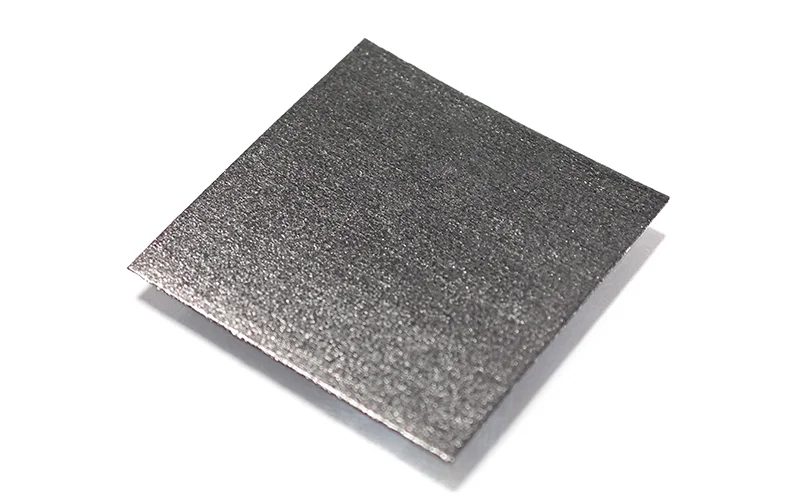
Product Performance Overview
The HGP series comes in three models: HGP6, HGP8, and HGP10. Despite their simple names, each has its own characteristics.
The most direct difference is thermal resistance:
- HGP6: Thermal resistance ≤0.06 ℃·cm²/W
- HGP8: ≤0.08 ℃·cm²/W
- HGP10: ≤0.10 ℃·cm²/W
What do these numbers mean? Take HGP6 for example - with a thermal resistance of 0.06, it's several times lower than most thermal silicone pads on the market. Heat conduction efficiency is directly elevated to the next level.
In terms of weight, density is controlled below 0.95 g/cc. You can clearly feel it's much lighter than traditional materials when holding it, which is crucial for products pursuing lightweight design.
HGP6 has the highest compression stress, suitable for applications requiring stronger compression force; HGP10 has the lowest compression stress, more suitable for precision components. The specific choice depends on the actual application.
Real-World Application Results
Honestly, we weren't initially certain about the performance of graphene materials in real applications. After all, there are many pitfalls between laboratory and mass production.
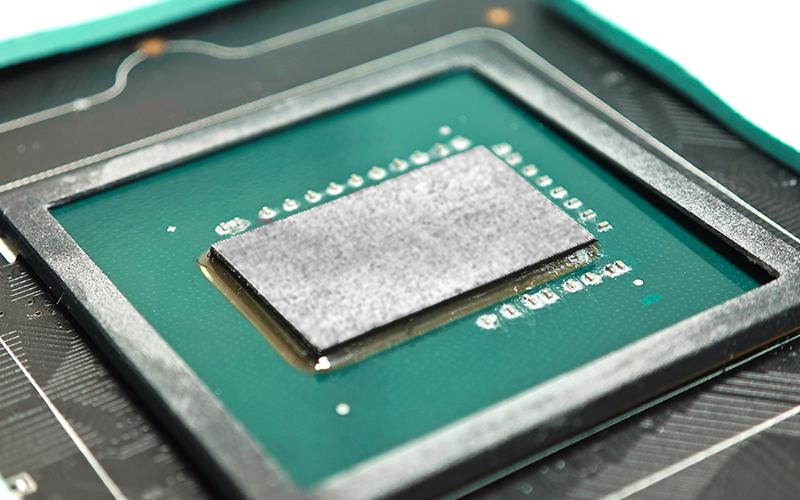
However, based on feedback from the past six months of testing, the results have been impressive. One GPU client was using thermal silicone pads, and the graphics card core temperature often spiked above 85°C under full load. After switching to our HGP6, under the same conditions, temperature was controlled around 73°C - a 12-degree reduction.
Another telecommunications equipment manufacturer had overheating issues with 5G base station power amplifier modules, especially in summer outdoor environments, where they frequently reduced power due to thermal protection. After using HGP8, module temperatures dropped significantly, basically solving the thermal throttling problem.
Customization Options
Standard specifications are 60×60mm with 0.3mm thickness, but this certainly can't meet all requirements.
Thickness can be customized within the 0.2-2.0mm range, covering most application scenarios. If edge sealing or adhesive fixing is needed, we can handle that too.
Some customers need custom cutting, such as circular, elliptical, or center-hole patterns - none of these are problems. Just provide the drawings, and we can process according to requirements.
Usage Precautions
While graphene material itself is very stable, storage has some requirements:
- Temperature should not exceed 30°C, humidity controlled below 70%, avoid direct sunlight. When stacking, don't exceed 5 layers, total height shouldn't exceed 1 meter.
- Under these storage conditions, shelf life is 2 years. Of course, actual service life is much longer.
- Operating temperature range is -40 to 150°C, covering the usage environment of most electronic products. Even outdoor base station equipment, from minus 30-40°C in winter to over 100°C inside equipment in summer, all fall within the working range.
Suitable Applications
Current applications are mainly concentrated in several areas:
- High-performance computing: Used directly in GPU and CPU packaging, with the most direct heat dissipation effect. Particularly suitable for servers and workstations that run under high loads for extended periods.
- Communication equipment: 5G base stations and optical modules with very high power density - traditional materials really can't handle it, graphene materials perfectly solve this pain point.
- Consumer electronics: While phones and tablets don't have particularly high power, space constraints are severe, and every degree of temperature reduction is valuable.
Model Selection Guide
- For high-power devices with strict heat dissipation requirements, we recommend HGP6 - lowest thermal resistance and best heat dissipation effect.
- For precision components that can't withstand high pressure, HGP10 is more suitable with only 60psi compression stress.
- HGP8 is a compromise choice, with performance and pressure both at intermediate levels, suitable for a wide range of applications.
Of course, the best choice should ultimately be based on actual test results. We can provide samples for testing before making decisions.
Contact Information
For technical questions about the product, you can directly contact our engineering team. We have dedicated personnel for sample applications, customization requirements, and bulk purchasing.
Feel free to contact us anytime for more information or to apply for sample testing.