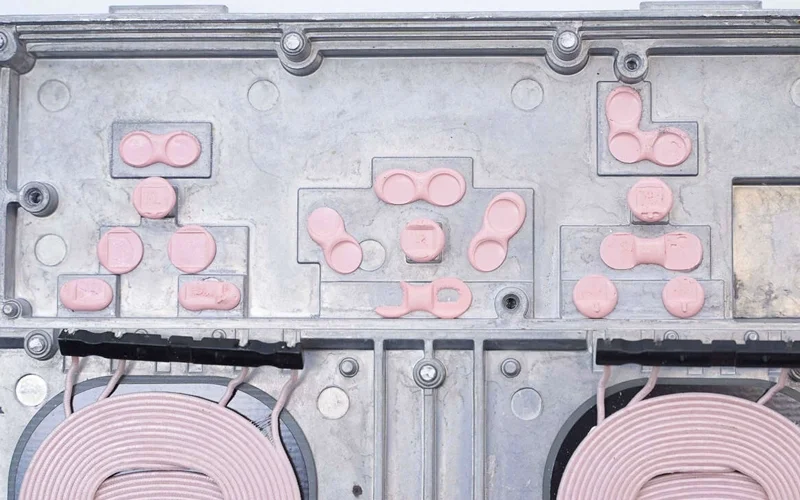
Tesla Wireless Charging Module Is Coated with Pink Thermal Putty to Enhance Heat Dissipation and Reduce Temperature Rise
Introduction
As wireless charging becomes an integral feature in modern electric vehicles, effective thermal management is increasingly critical to system reliability and user safety. High power density, continuous operation, and compact module design can lead to excessive heat accumulation if not properly managed. Leading automotive manufacturers, including Tesla, have adopted thermally conductive putty to enhance heat dissipation and reduce temperature rise in wireless charging modules.
This approach highlights the growing importance of advanced thermal interface materials in automotive electronics.
Thermal Challenges in Automotive Wireless Charging Systems
Wireless charging modules in vehicles integrate power electronics, coils, and control components within limited space. During operation, these components generate heat that must be efficiently transferred away to maintain stable performance.
Key thermal challenges include:
- Limited airflow inside vehicle interiors
- High operating temperatures during extended charging
- Tight mechanical tolerances between components and enclosures
Without effective heat transfer, elevated temperatures may reduce charging efficiency, accelerate component aging, or compromise long-term reliability.
Why Thermal Putty Is Used in Wireless Charging Modules
Thermal putty is a soft, highly conformable thermal interface material designed to bridge air gaps between heat-generating components and heat sinks or metal housings. Unlike traditional thermal pads or rigid fillers, thermal putty adapts easily to uneven surfaces and complex geometries.
Its primary advantages include:
- Excellent surface wetting and gap filling
- Stable thermal conductivity under vibration and thermal cycling
- Long-term reliability without pump-out or cracking
These characteristics make thermal putty particularly suitable for automotive-grade wireless charging applications.
Enhancing Heat Transfer and Reducing Temperature Rise
By coating the wireless charging module with thermally conductive putty, heat generated during charging is efficiently transferred to the aluminum alloy housing. The housing then acts as a passive heat spreader, dissipating heat away from sensitive components.
This design approach helps:
- Lower peak operating temperatures
- Minimize localized hot spots
- Improve overall thermal stability during continuous charging
As a result, the charging module maintains consistent performance even under demanding conditions.
Benefits for Automotive Electronics Reliability
Improved thermal management directly contributes to the durability and safety of automotive electronics. Stable operating temperatures reduce thermal stress on components, helping extend service life and reduce the risk of failure.
For electric vehicles, this translates into:
- More reliable wireless charging performance
- Enhanced passenger safety
- Improved user experience through consistent device charging
Thermal interface materials such as conductive putty play a key role in meeting stringent automotive quality and safety standards.
Conclusion
As vehicle electronics continue to evolve toward higher power density and smarter functionality, thermal management solutions must advance accordingly. The use of thermally conductive putty in wireless charging modules demonstrates an effective strategy for improving heat dissipation and controlling temperature rise in automotive applications.
By integrating advanced thermal interface materials into module design, manufacturers can ensure reliable performance, long-term stability, and enhanced safety in next-generation electric vehicles.
If you would like to learn more about AOK performance thermal materials, please visit our website